About Jeroen van Craaikamp

This author has not yet filled in any details.
So far Jeroen van Craaikamp has created 49 blog entries.

ITIL Version 5 (Foundation) Released!!

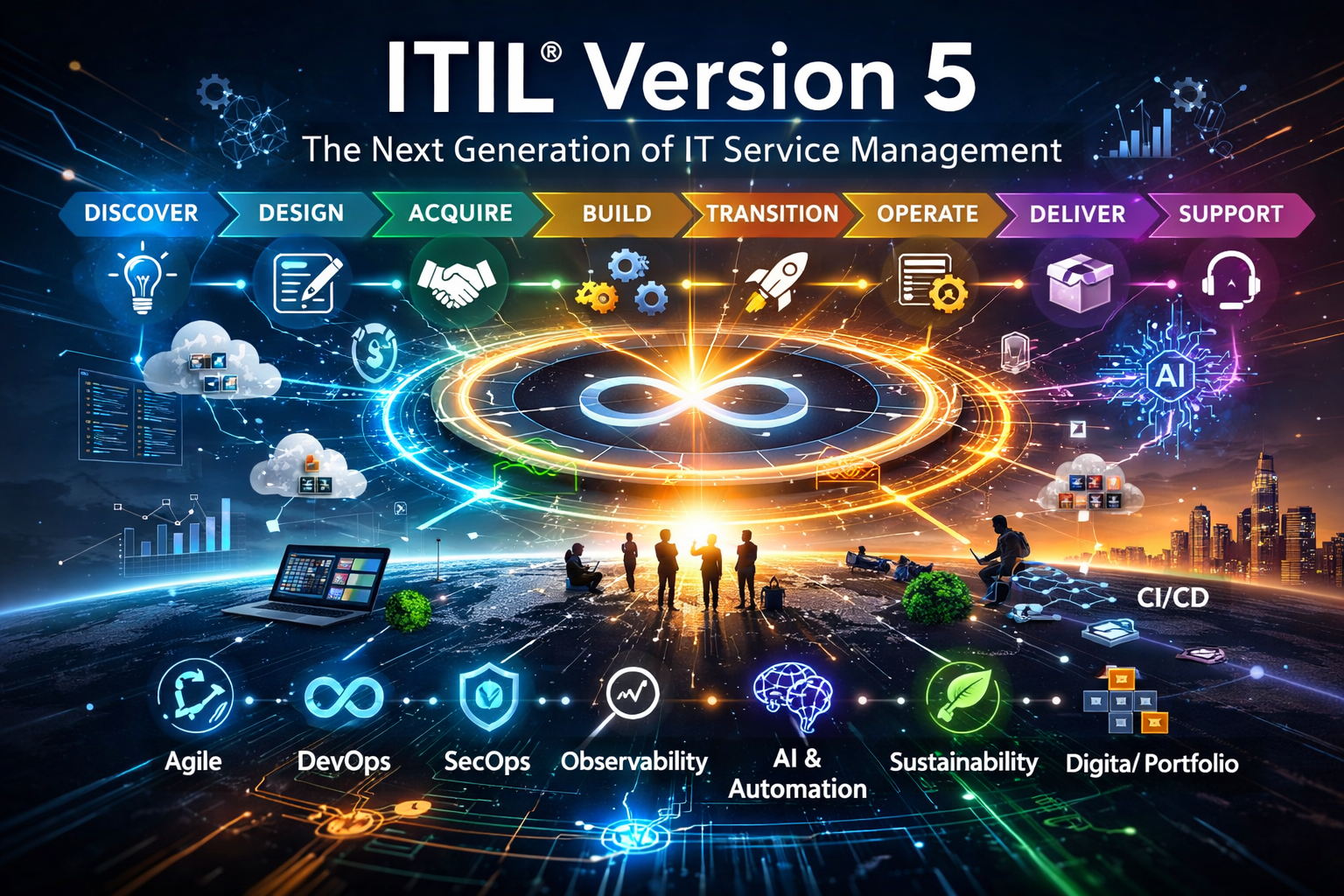
In February 2026, Peoplecert (formerly known as Axelos). published the long-awaited ITIL Version 5 Foundation. After reading the ITIL Version 5 Glossary and Quick Reference Guide , I became curious about what Version 5 has to offer in today's world of Cloud Computing, AI, DevOps, SecOps, Observability, and CI/CD Pipelines, as well as Digital Product Mngt. So, I purchased the course, went through all the training material and took the Mock-up Exam. Clearly, I'm not perfect; I passed with a score of 83%, [...]

By |2026-03-02T18:53:54+02:00March 1st, 2026|IT4IT|Comments Off on ITIL Version 5 (Foundation) Released!!

ITIL Version 5 + IT4IT 3.0 + TOGAF 10 + SAFe 6.0 + DevOps + SecOps = ????

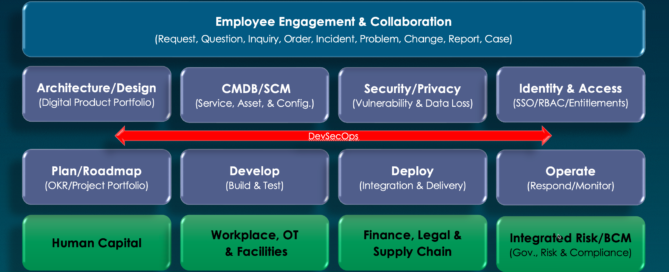
Modern IT organizations rarely run on a single doctrine. They operate with a deliberate mix of delivery, operations, risk, and architecture frameworks, all of which want a piece of the same change. Typical ingredients: SAFe (Scaled Agile Framework) for scaled portfolio and product management DevOps for engineering flow and automation SecOps for security monitoring, threat handling, and cyber response ITIL Version 5 for digital product & service lifecycle governance TOGAF 10 for enterprise architecture capability and architecture governance ArchiMate 3.2 as the modeling [...]

By |2026-03-02T18:32:59+02:00March 1st, 2026|IT4IT|Comments Off on ITIL Version 5 + IT4IT 3.0 + TOGAF 10 + SAFe 6.0 + DevOps + SecOps = ????

AI, ServiceNow and the Battle for the Front End

The debate about AI in the ServiceNow ecosystem is no longer limited to ticket automation. A structural shift is emerging: from fragmented application portals to a single, agent-driven enterprise service layer. That shift is not purely technical. Many vendors, departments, and product teams currently earn their living by owning and customizing their own front end — their own portals, their own UX, their own workflows. Consolidating those front ends into a single enterprise-wide ServiceNow layer implies technical integration, but also political and economic redistribution. [...]

By |2026-03-02T18:33:51+02:00February 28th, 2026|IT4ESM|Comments Off on AI, ServiceNow and the Battle for the Front End

CSDM5 Cheat Sheet

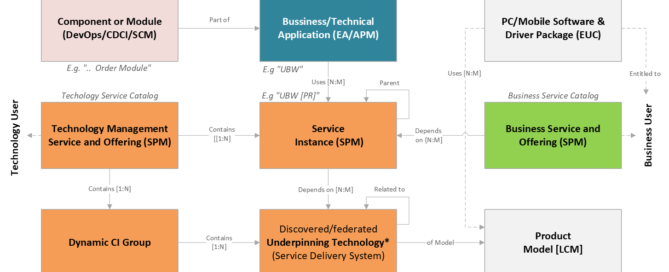
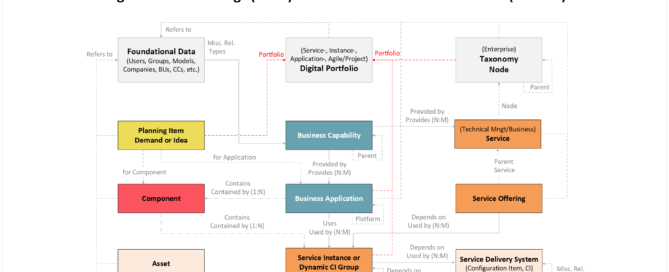
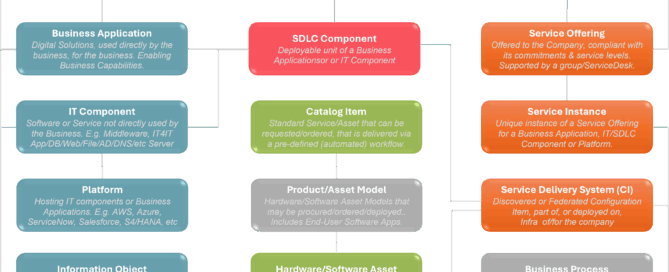
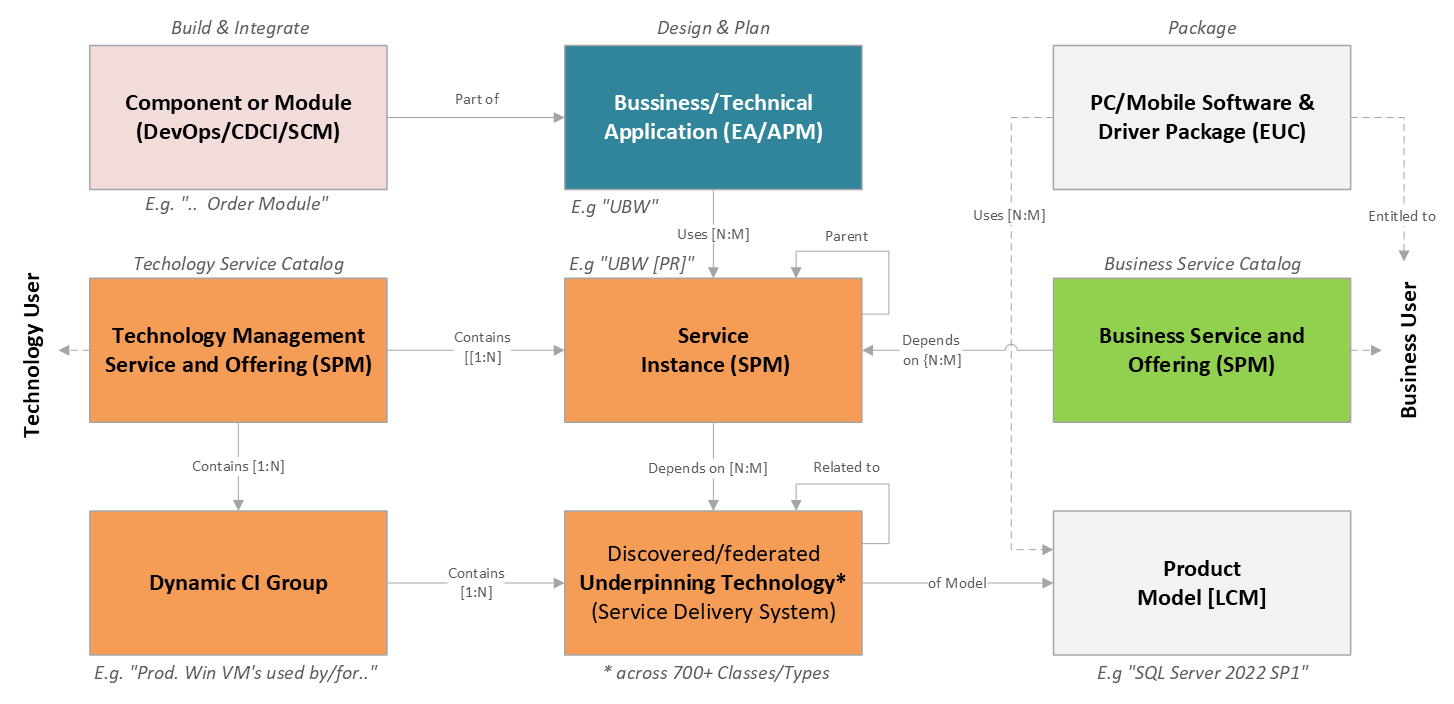
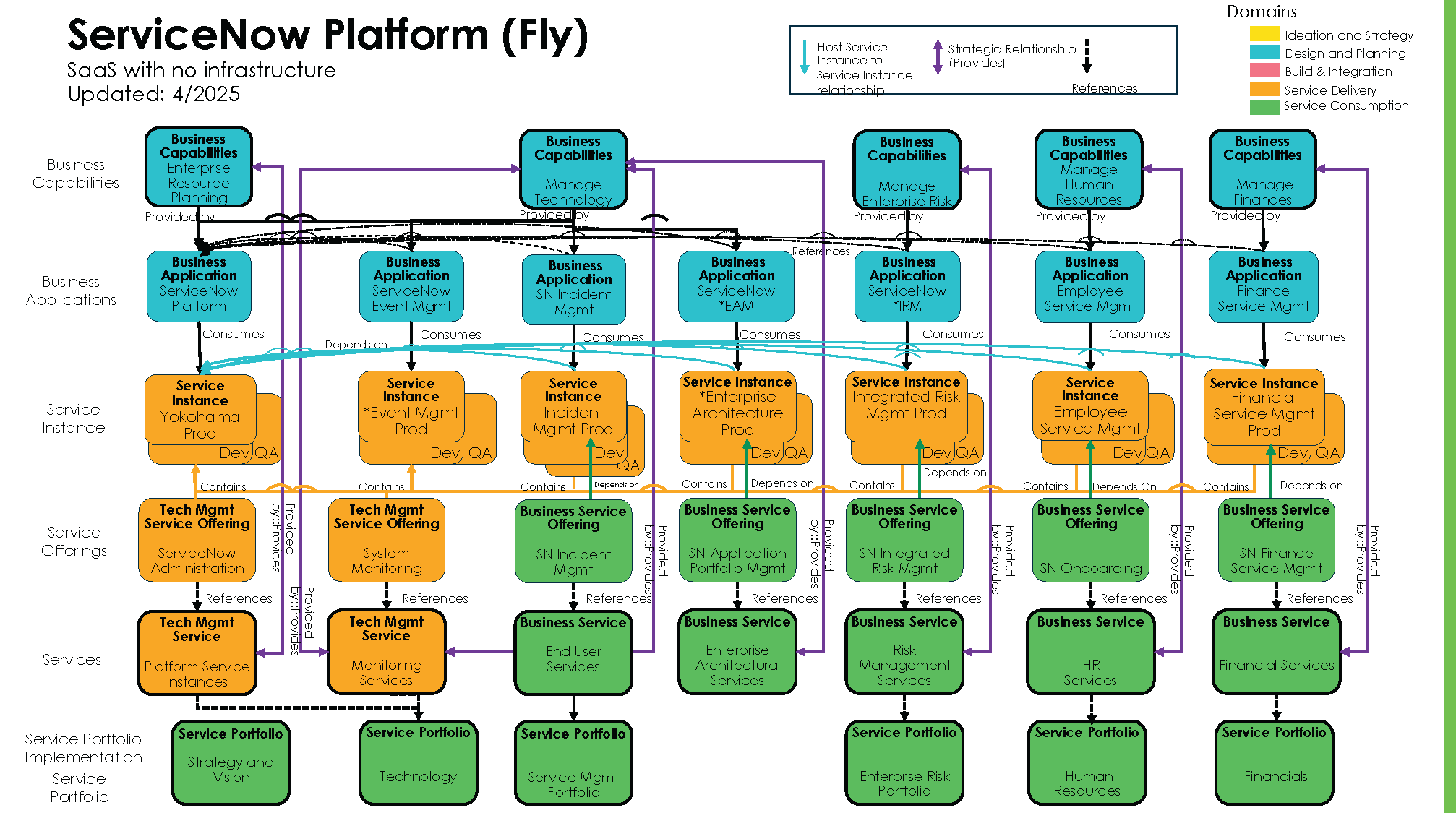
CSDM5 is a Data Model that always leads to interesting discussions because each persona views it from their own perspective. This cheat sheet should help with what goes where if one sticks to the CSDM5 definitions/intentions of the various artefacts. If one does so, there is little to no need to customize the tables or relations between the tables.The following definitions/principles apply throughout this cheat-sheet::Baselines are portfolio items that are designed, procured, or developed and documented in catalogs, e.g., a "Volvo V70." Instances are [...]

By |2026-03-02T18:34:07+02:00February 1st, 2026|TBM/CSDM/CMDB|Comments Off on CSDM5 Cheat Sheet

Change Management vs CSDM5

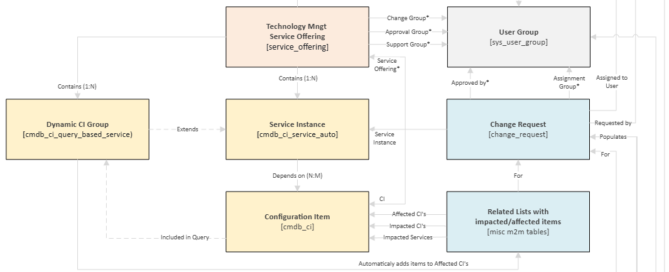
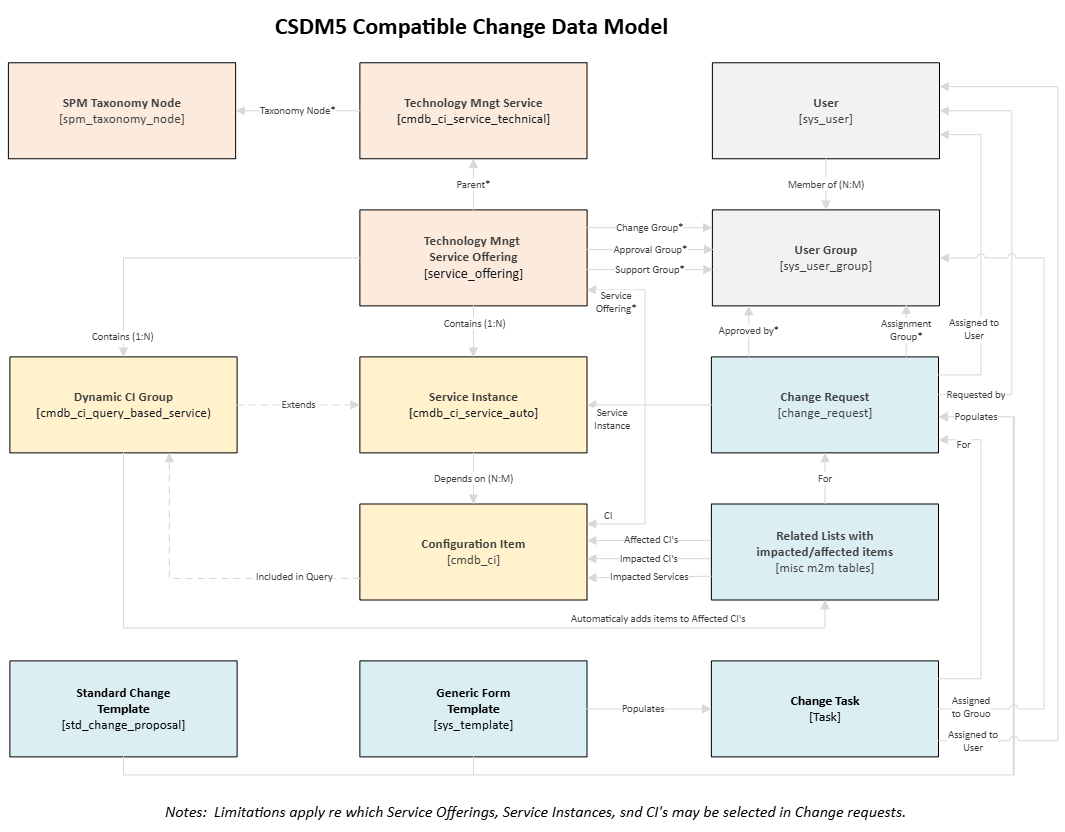
ServiceNows' Out-of-the-Box Change Management process, as included in the Zurich release, is a variant of ITIL V3.. This article details how to configure the Change Process to work seamlessly with DevSecOps, leveraging the recommended CSDM5 relationships. Afterward, Users don't have to be data analysts to use the CSDM data within change management as intended. Users can only select Services, Offerings, Instances, and CIs that are in scope of Change Mngt, ensuring that the Change Mngt process manages and communicates only relevant changes The recommended [...]

By |2026-02-01T03:18:32+02:00January 31st, 2026|ServiceNow, TBM/CSDM/CMDB|Comments Off on Change Management vs CSDM5

ITOM, Certificate Management

As part of the ServiceNow ITOM Discovery product, ServiceNow provides a comprehensive Certificate Management capability. This functionality is designed to give organizations visibility, control, and automation across the full certificate lifecycle, while keeping the CMDB accurate and up to date. Core Capabilities ServiceNow Certificate Management supports the following key functions: Discovery and federation of certificates, registering them as Configuration Items (CIs) in the CMDB, including references to where certificates are deployed Expiration monitoring, with detection of upcoming certificate expiry and automatic assignment and tracking [...]

By |2026-03-02T18:34:29+02:00January 13th, 2026|TBM/CSDM/CMDB|Comments Off on ITOM, Certificate Management

CMDB vs CSDM — Scope and Purpose Explained

Although often used interchangeably, CMDB and CSDM serve fundamentally different purposes. Confusing the two is one of the main reasons 75% of the CMDB initiatives fail. What Is the CMDB? The Configuration Management Database (CMDB) is an operational data store. CMDB scope The CMDB contains: Deployed configuration items (CIs) Runtime instances and their technical relationships Discovered and federated infrastructure and platform components Service instances and their dependencies Operational attributes required for ITSM, ITOM, SecOps, and risk use cases CMDB characteristics Focused on runtime [...]

By |2026-01-03T17:14:30+02:00December 23rd, 2025|Information, TBM/CSDM/CMDB|Comments Off on CMDB vs CSDM — Scope and Purpose Explained

How to Operationalize CSDM5? Transition from CMDB Burden to meaningful Business Value

Industry figures consistently show that only about 25% of organisations realise meaningful value from their CMDB investments. In most cases, the CMDB data model is implemented from a predominantly technical perspective. As technology stacks grow more complex, the CMDB becomes increasingly difficult for business stakeholders to understand and use. The consequences are familiar: outdated operating models remain in place, modern practices are only partially adopted, data quality declines, operational costs rise, and the promised benefits of the CMDB fail to materialise. Experience across CMDB [...]

By |2026-01-03T17:14:30+02:00December 21st, 2025|ServiceNow, TBM/CSDM/CMDB|Comments Off on How to Operationalize CSDM5? Transition from CMDB Burden to meaningful Business Value

CSDM5 On One Page

Not everybody has time to read a long white paper or go through endless PowerPoint slides. This article provides a knowledge article that describes the key artefacts and explains how to classify and govern them in compliance with CSDM5. STRATEGIC PORTFOLIO & ARCHITECTURE A Business Capability (e.g., "Contract Management") is a strategic function realized by the governing portfolio asset(s): the Business Application(s). A Business Application is the conceptual system that interfaces with other Business Applications and has a lifecycle and ratings that the [...]

By |2026-01-03T17:14:30+02:00December 9th, 2025|Uncategorized|Comments Off on CSDM5 On One Page

Drift Management: Why It Matters, Who Needs It, and How to Get It Right

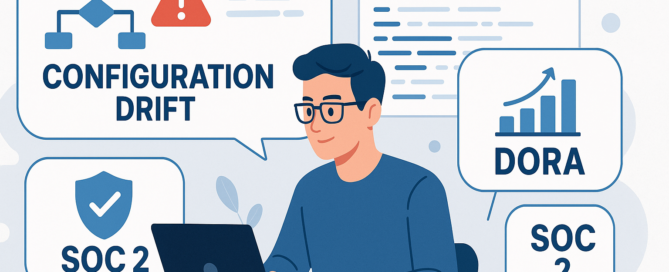
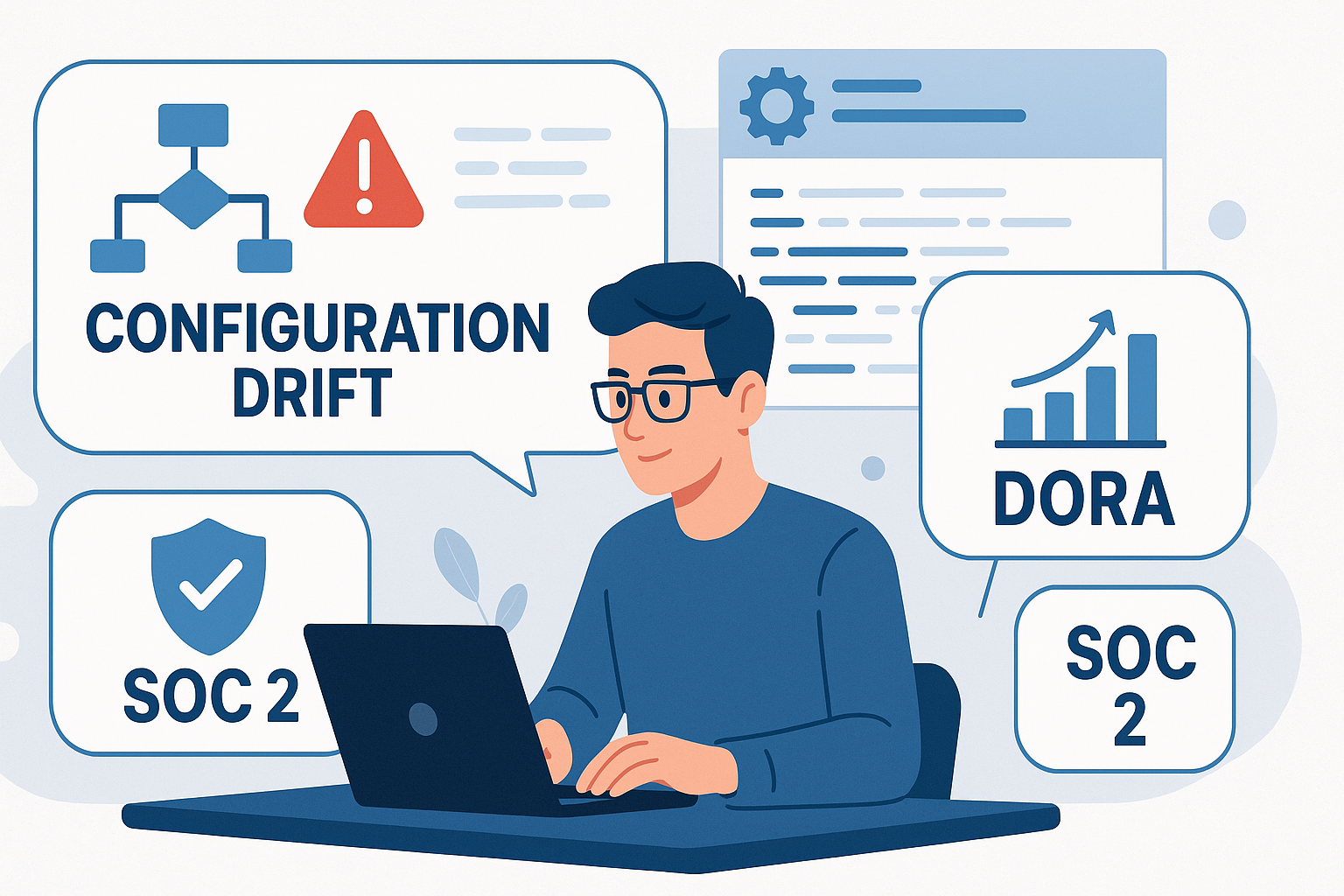
IT environments rarely break because of one big dramatic event. More often, they erode slowly: a configuration flag quietly flipped, a firewall rule added “just for testing,” a VM resized without documentation, a registry key tweaked by an engineer in a hurry. Individually harmless. Cumulatively fatal. That creeping erosion is configuration drift—and left unmanaged, it undermines security, stability, auditability, and engineer sanity. This blog outlines what drift management is, why organisations benefit from it, and what you actually need to implement it effectively. 1. [...]

By |2026-01-03T17:14:30+02:00December 5th, 2025|IT4IT|Comments Off on Drift Management: Why It Matters, Who Needs It, and How to Get It Right

Change and Drift Mngt in 2025

Despite rapid advances in cloud computing, DevOps, automation, and Infrastructure-as-Code, many organizations still struggle with a fundamental question: What actually constitutes a “change” in 2025 — and what does not? Is every drift detected, to be managed via change? Misclassification leads to unnecessary workload for change managers, friction for engineering teams, and reduced operational clarity. At the same time, under-governance creates unacceptable risk. Modern Change Management must therefore strike a careful balance between speed and control, using clear decision criteria and placing each activity [...]

By |2026-03-02T18:34:40+02:00December 4th, 2025|IT4IT, ServiceNow|Comments Off on Change and Drift Mngt in 2025

You want a better CSDM, for less money, and you want it now?

That is possible by making the contents of the CSDM almost Zero-touch. You can import a product-agnostic Service Portfolio which does not have to be updated whenever you change a product. If you link IT service delivery process to asset management, you can update your asset repository (almost) automatically, You can update the CMDB automatically using Automated Discovery/Federation. And lastly you can map those items to the Service Instances that you defined. The only thing that your architects and data stewards need to do [...]

By |2026-01-03T17:14:30+02:00September 13th, 2025|TBM/CSDM/CMDB|Comments Off on You want a better CSDM, for less money, and you want it now?

Meet our Digital Portfolio Manager: ChatGPT 5 Pro!!

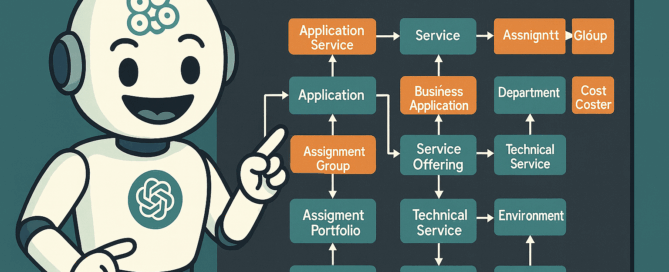
Recently, I asked ChatGPT 5 Pro to define the artefacts and their relations that need to be registered in ServiceNow. In this article, you will find what went surprisingly well and what failed miserably. The detailed results (which considered compliance with the CSDM 5 and TBM 5 Standards) that the ChatGPT Chatbot generated are shown as well. Spoiler Alert: ChatGPT proves to be a great assistant that probably has read all CSDM5 and TBM5 documentation from beginning to end, but the Bot will [...]

By |2026-01-03T17:14:30+02:00September 11th, 2025|TBM/CSDM/CMDB|Comments Off on Meet our Digital Portfolio Manager: ChatGPT 5 Pro!!

CSDM5 explained in 10 minutes…

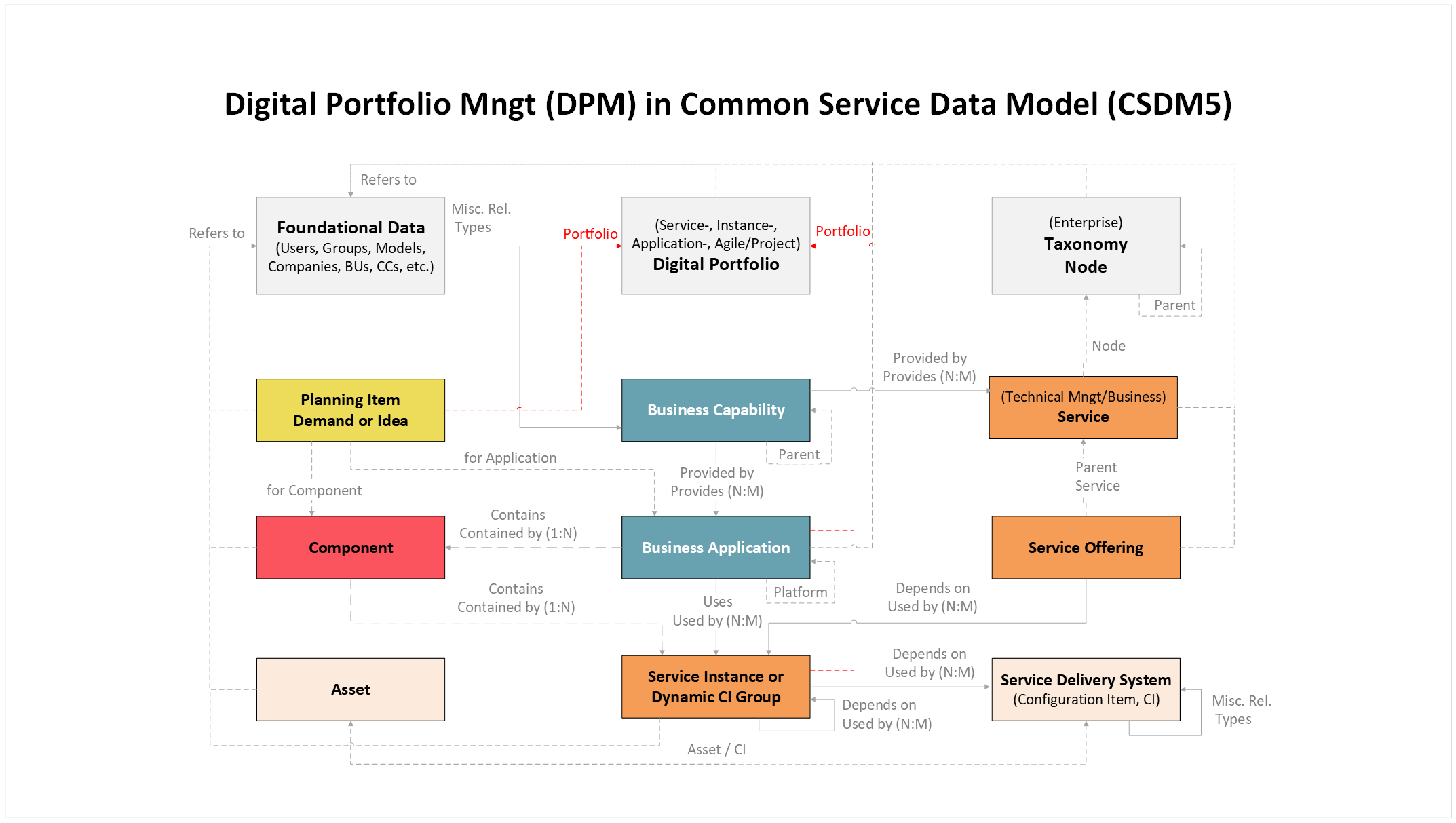
There are hundreds of interpretations of the ServiceNow Common Service Data Model (CSDM). In this article, you will find the how CSDM5 is construed and implemented in ServiceNow. Different lenses, different focus. Program/Project Managers manage the Project/Demand Portfolio. Enterprise Architects manage the Application Portfolio Product Owners manage the backlog for their components in the Product Portfolio Service Owners manage their artifacts in the Service Portfolio Configuration Managers track their IT Inventory in the Configuration Management Database (CMDB) Asset Managers track the book value, operational [...]

By |2026-03-02T18:34:51+02:00September 6th, 2025|TBM/CSDM/CMDB|Comments Off on CSDM5 explained in 10 minutes…

Fix Script to remove obsolete/invalid CI Relations, with preview option

Relations in the ServiceNow CMDB can easily get out of control, leading to performance problems and reduced data quality. To help address this, the script below provides a safe way to clean up the cmdb_rel_ci table—for example, after mass-updating the Operational State of CIs or after mass-deleting CIs. Because a ServiceNow CMDB can contain millions of relations—and because these relations drive impact analysis—it is critical to keep the table contents clean. When a CI is removed, its relations should also be removed. While I [...]

By |2026-01-03T17:14:30+02:00September 5th, 2025|ServiceNow Scripts|Comments Off on Fix Script to remove obsolete/invalid CI Relations, with preview option

Structuring IT the Smart Way: Six Top-level Services for Enterprises

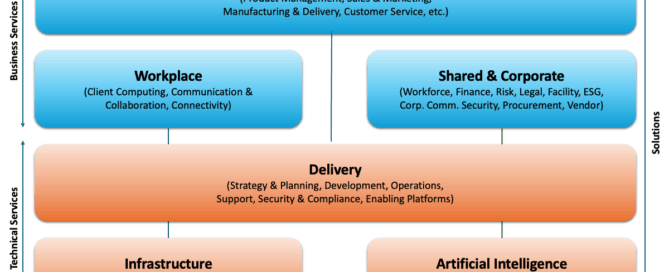
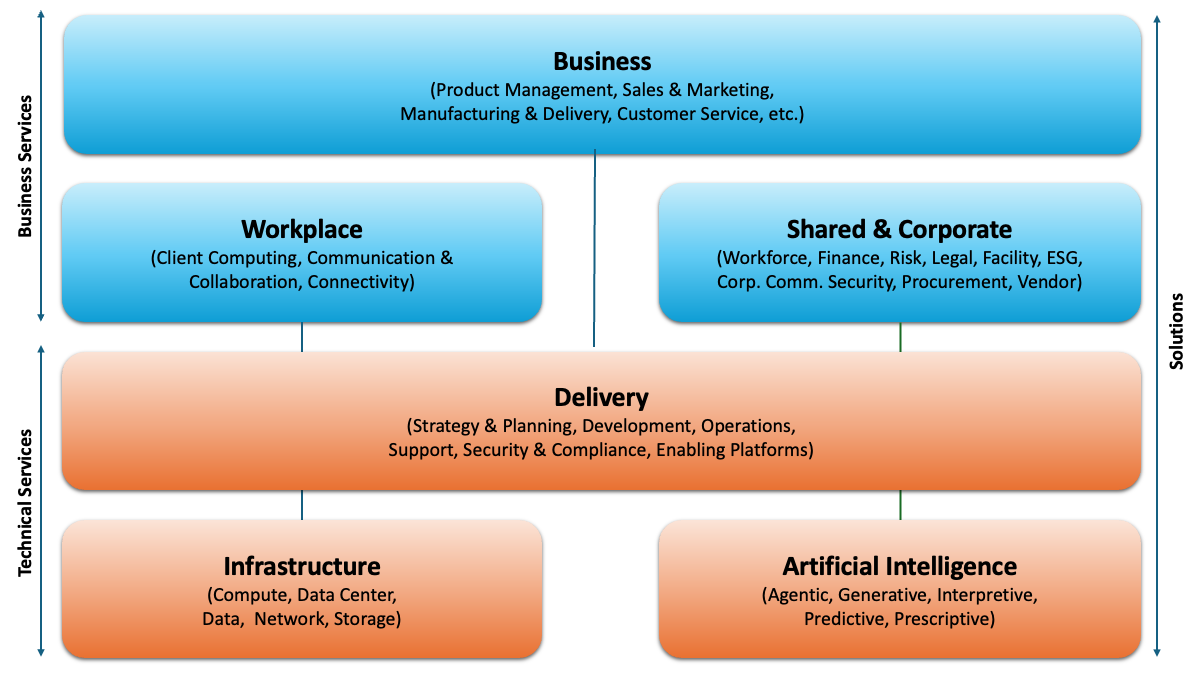
For many organizations, IT is still structured around systems, platforms, or departments. While that might have worked in the past, it often results in fragmented ownership, blurred accountabilities, and difficulties aligning with business needs. A better way forward is to structure IT around six top-level services, derived from the six solution types in the TBM (Technology Business Management) 5 framework. This model creates clarity, aligns IT with business value, and allows enterprises to manage technology at the right level of abstraction. By structuring [...]

By |2026-01-03T17:14:31+02:00August 27th, 2025|Uncategorized|Comments Off on Structuring IT the Smart Way: Six Top-level Services for Enterprises

Why reinvent the wheel? Use TBM 5.0 Content in the CSDM 5.0 Data Model

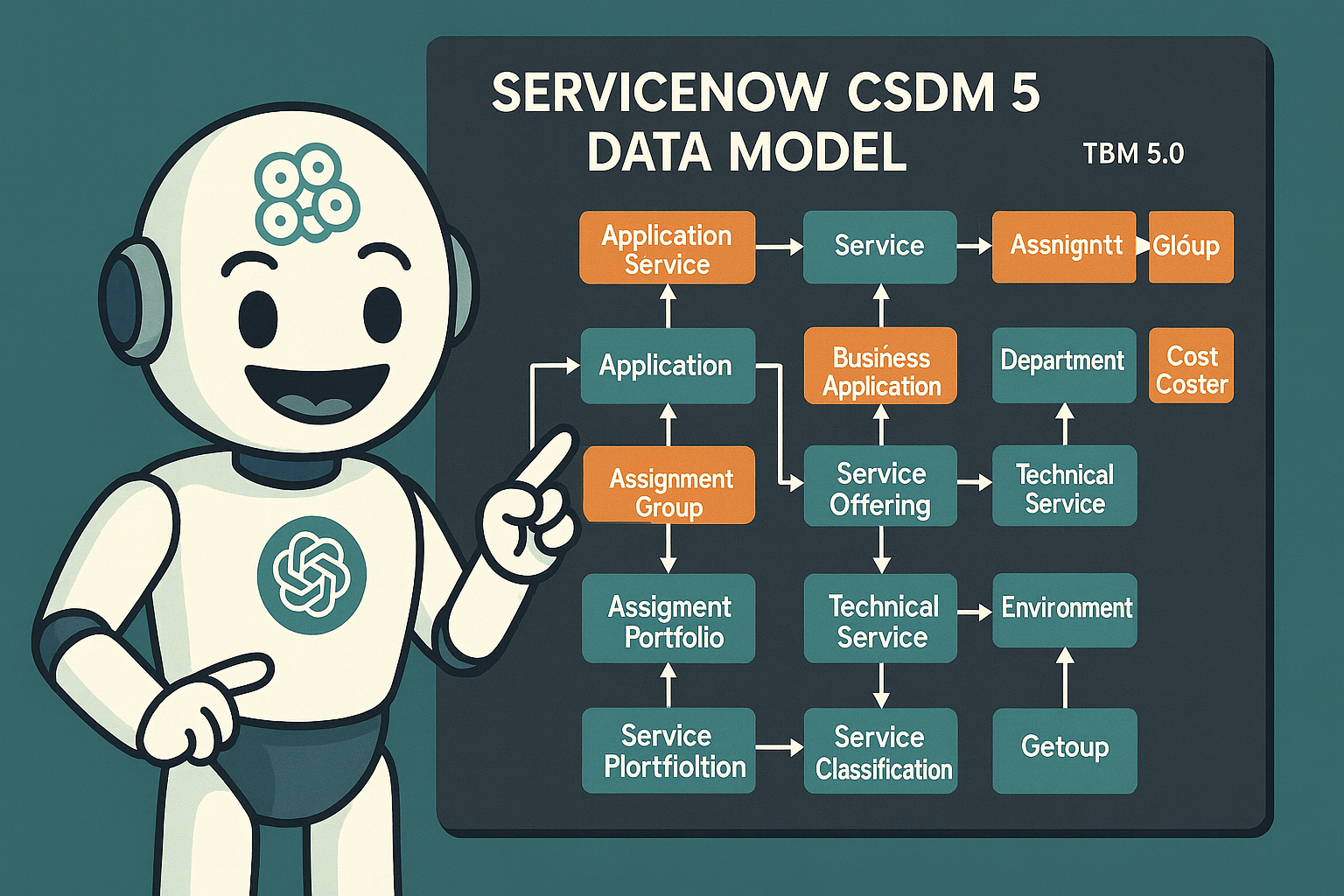
ServiceNow defined a Common Service Data model (CSDM5) without content. The TBM Council defined both a data model (TBM5) and its content. This article describes how to populate the content of TBM5 into CSDM5. TBM5 defined/described (relations between) artifacts for "Technology Consumers" (who?), "Technology Solutions" (what?), "Technology Resource Towers" (how?), and "Technology Cost Pools" (how much?). You can download a free copy of the TBM 5.0. CSDM5 defined/described who, what, how, and how much, albeit its focus is more on ITSM/ITOM than on ITAM/ITFM. [...]

By |2026-01-03T17:14:31+02:00August 22nd, 2025|ServiceNow, TBM/CSDM/CMDB, Uncategorized|Comments Off on Why reinvent the wheel? Use TBM 5.0 Content in the CSDM 5.0 Data Model

Rethinking IT Foundations: From SaaS to Services, Products, and Beyond

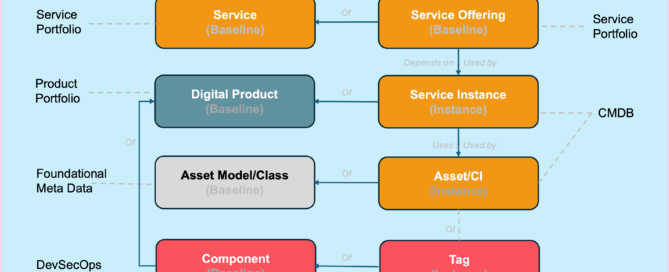
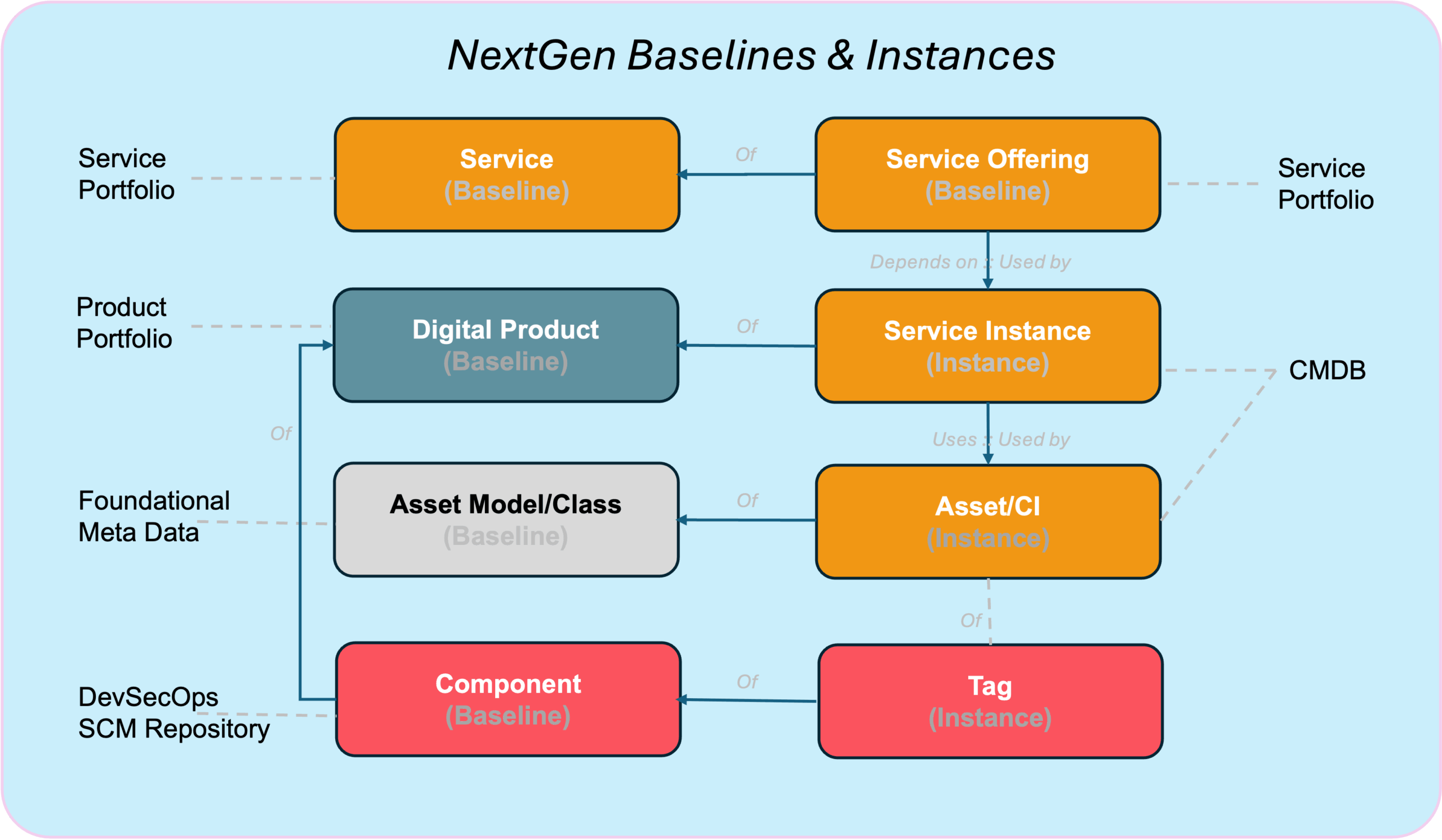
For years, we’ve relied on concepts like SaaS, PaaS, IaaS, and DCaaS to describe how technology is delivered. These terms still exist, but they no longer fully capture today’s reality. Why? As platforms become software-defined, AI prompts are replacing software code, and information is scattered across multiple repositories, each serving the different needs of different types of stakeholders. To manage this complexity, we need a sharper lens and a common language, for the things we share. Baselines vs. Instances: Two Different Worlds In modern [...]

By |2026-01-03T17:14:31+02:00August 16th, 2025|IT4ESM, IT4IT, ServiceNow, TBM/CSDM/CMDB|Comments Off on Rethinking IT Foundations: From SaaS to Services, Products, and Beyond

How to manage content in ServiceNow CMDB/CSDM?

Populating and maintaining an accurate Configuration Management Database (CMDB), aligned with ServiceNow’s Common Service Data Model (CSDM), is a significant challenge for most enterprises. This guide outlines how to do it right, what types of items should (and should not) be registered in the CMDB, and the most effective methods to achieve high-quality data—both with today’s technology and in preparation for tomorrow’s needs. Core Philosophy Enterprises should manually define and maintain their portfolio baselines (e.g., services, offerings, applications). The instances of those baselines—the [...]

By |2026-03-02T18:35:06+02:00July 31st, 2025|TBM/CSDM/CMDB|Comments Off on How to manage content in ServiceNow CMDB/CSDM?

Going overboard with CSDM 5?

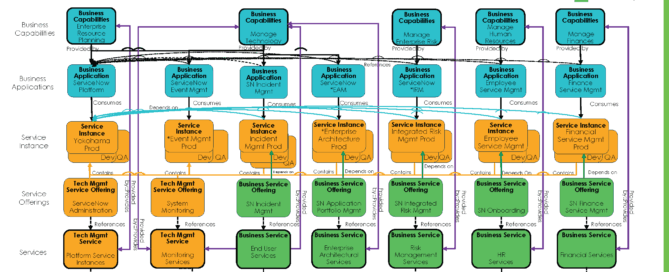
ServiceNow published a PowerPoint presentation with 132 slides with examples on how one could model the IT landscape accormodeoding to CSDM 5. Although I generally love CSDM, some appear to go overboard when modelling their IT landscape in ServiceNow. Let's take an example: How (not) to model the ServiceNow Platform in CSDM 5. The ServiceNow platform that is used for different types, sizes, maturities of companies, for different things, by different people, in different cultures, that often are using multiple process frameworks. The CSDM [...]

By |2026-03-02T18:35:22+02:00June 7th, 2025|ServiceNow, TBM/CSDM/CMDB|Comments Off on Going overboard with CSDM 5?

25 AI Support Agent Conversation Examples

AI Support Agent Conversation Playbook – Multilingual IT Support via Microsoft Teams Overview This playbook provides 25 conversation examples for a multilingual AI agent that supports users via Microsoft Teams across the following IT domains: • End-User Devices • Identity & Access Management • Business Applications • Networking & Telecommunication • Collaboration Tools • Cloud Infrastructure • General Support & Universal Requests • Sensitive Security or Compliance Issues Each scenario includes a typical user question or issue, the AI agent’s diagnostic and response [...]

By |2026-03-02T18:35:51+02:00June 1st, 2025|AI4IT|Comments Off on 25 AI Support Agent Conversation Examples

Best Practices for CSDM 5

So, you have read the CSDM 5, and you have a general idea. However, there are numerous open questions and choices . This article describes the Practices that i recommend for what (not) to model in ServiceNow. Applying these recommendations avoid issues down the line. What to store in ServiceNow: In the Digital Products Portfolio (Baselines): All Digital Services that are formally offered as a Service to the Company, incl. Infrastructure, Applications, and AI Digital Assets (non versioned). [...]

By |2026-03-02T18:36:01+02:00June 1st, 2025|TBM/CSDM/CMDB|Comments Off on Best Practices for CSDM 5

Aligning APM, DPM, SCM, AI and CMDB

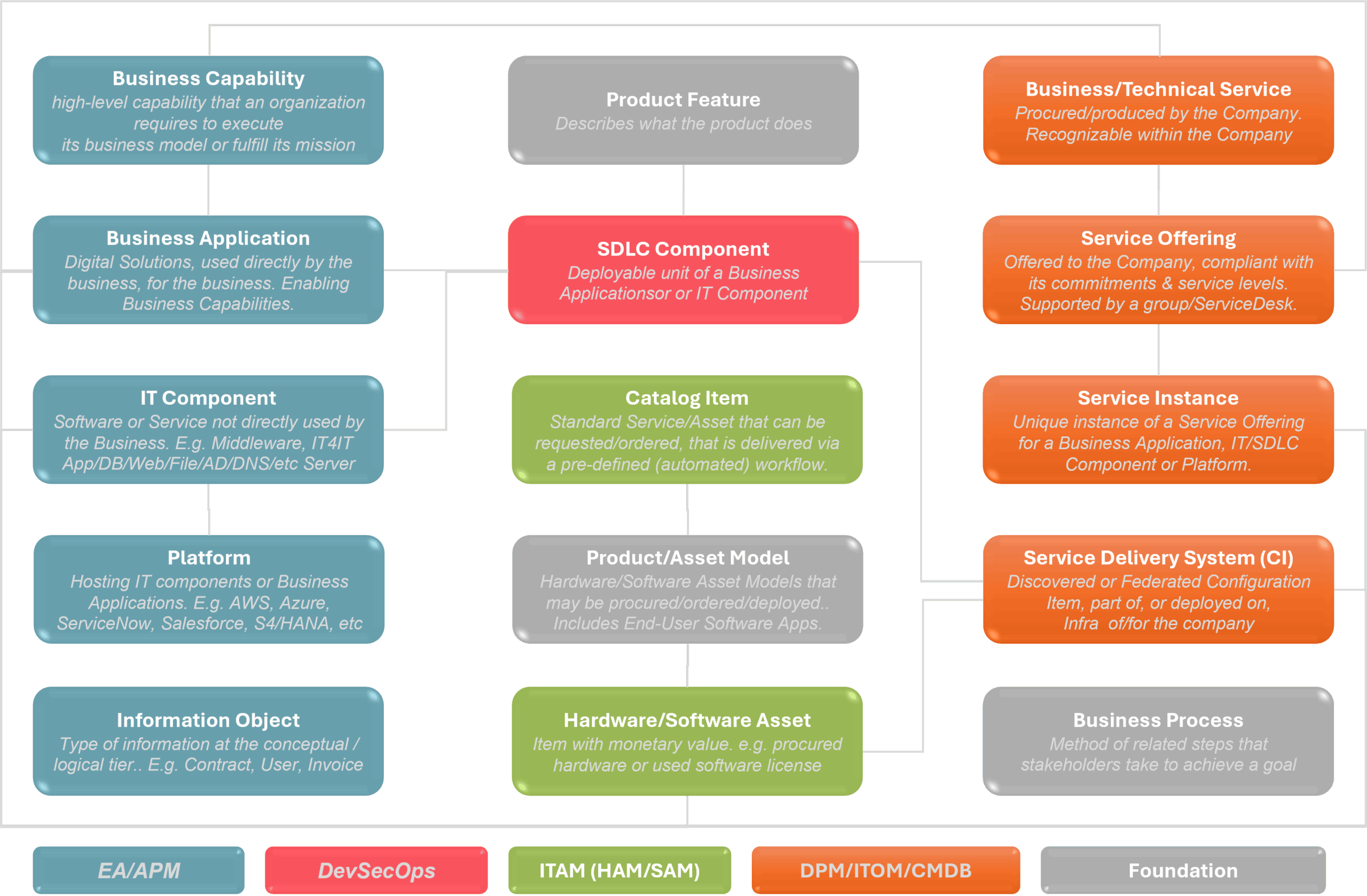
Each IT management framework has its distinct definitions, glossaries, and fanbase. And guess what? These often don't align or match with each other. Initially people differentiated between software and hardware. With the advent of massive Outsourcing, Cloud Services, and APIs, people began to distinguish between applications and infrastructure that could both be offered/consumed "as a Service". This was working well until the emergence of Software-Defined-Networks, Microservice Architecture, Generative AI, and now Agentic AI. The only thing that these things nowadays have in common is [...]

By |2026-03-02T18:36:11+02:00May 31st, 2025|TBM/CSDM/CMDB|Comments Off on Aligning APM, DPM, SCM, AI and CMDB

Enterprise Service Mngt (ESM) Capabilities?

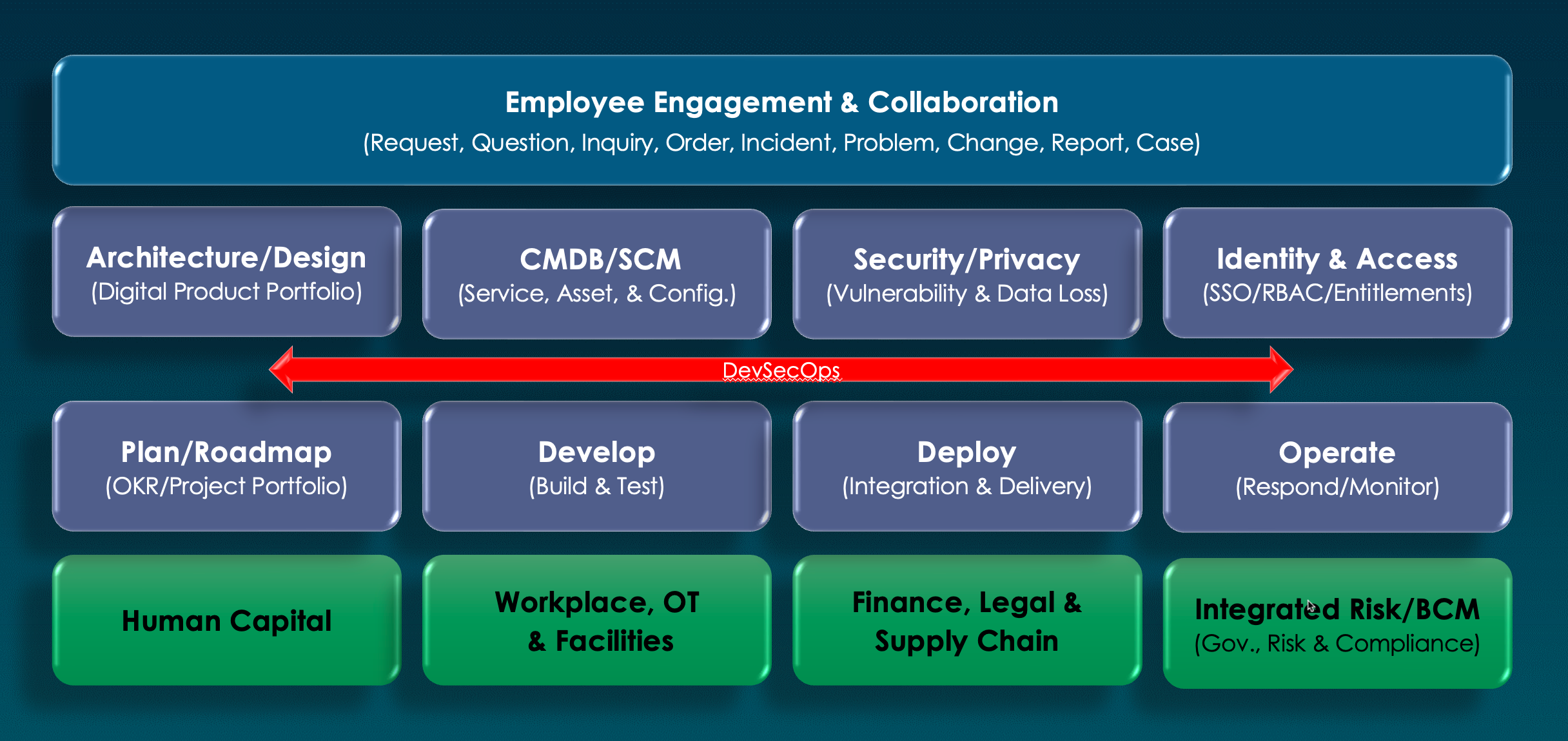
Employees of an Enterprise typically consume Enterprise-wide capabilities that Fulfillers and AI Agents enable. The FullFillers and AI-Agents are platform-agnostic and consume data from Systems of Record (SoR), and interact with Systems of Engagement (SoE).Agentic AI itself does not employ a hard-coded process flow; instead, it reasons and determines its next steps/actions based on real-time triggers, responses, data, and events. This makes Agentic AI for the Enterprise less predictable but more flexible and capable than its predecessors (machine learning and hard-coded workflows). That said, [...]
By |2026-03-02T18:36:23+02:00May 29th, 2025|IT4ESM|Comments Off on Enterprise Service Mngt (ESM) Capabilities?

What are AI Agent Cards in A2A?

An AI Agent Card is a structured, discoverable configuration file—essentially a digital resumé in YAML+ format—that describes an AI Agent according to the Agent-to-Agent (A2A) Protocol. It typically includes metadata such as the agent’s name, provider, capabilities, skills, API endpoint (URL), authentication mechanism, tags, and governance characteristics. These cards are either served directly by the AI Agent itself or hosted on an A2A-compliant server that can register and expose multiple AI Agents. The goal: make it easy for other agents, systems, or orchestration [...]

By |2026-01-03T17:14:31+02:00May 17th, 2025|AI4IT|Comments Off on What are AI Agent Cards in A2A?
Go to Top