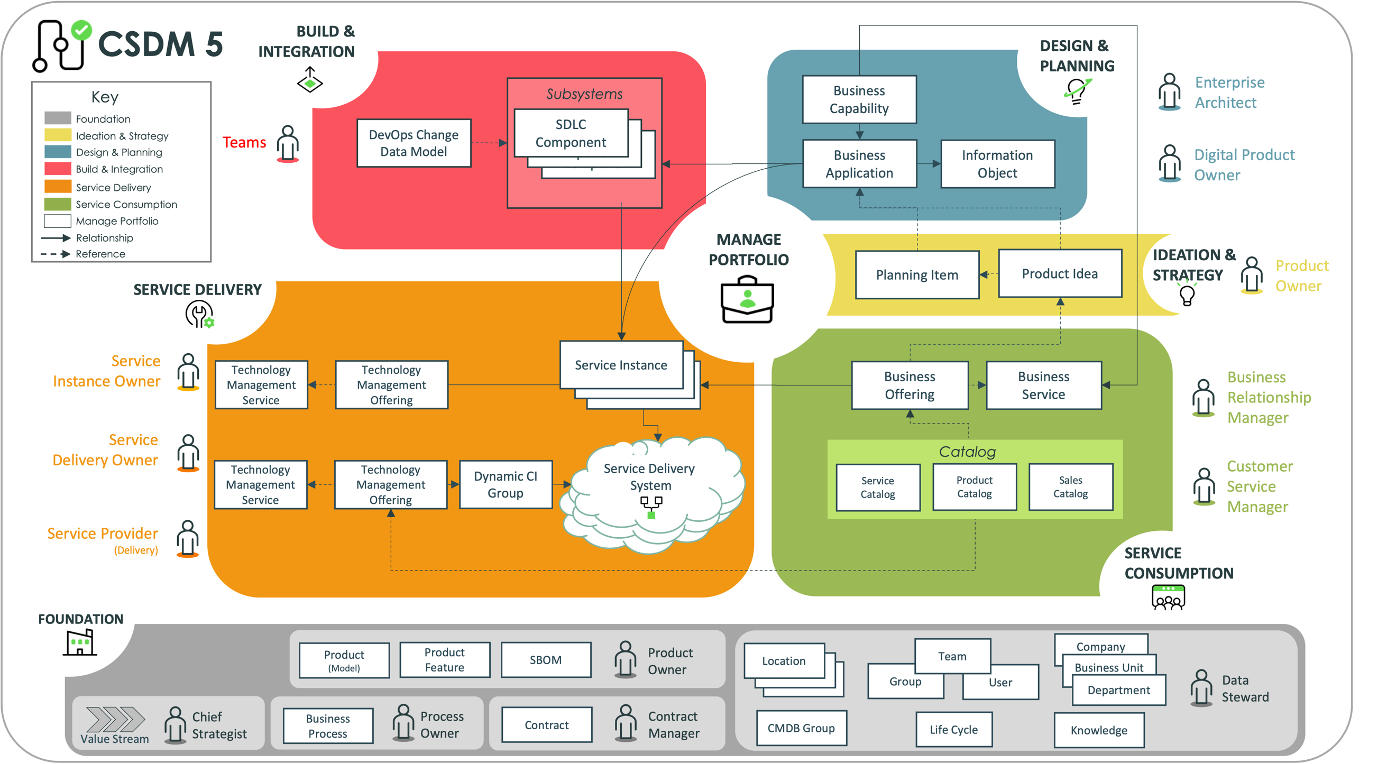
Modern IT organizations rarely run on a single doctrine. They operate with a deliberate mix of delivery, operations, risk, and architecture frameworks, all of which want a piece of the same change.
Typical ingredients:
- SAFe (Scaled Agile Framework) for scaled portfolio and product management
- DevOps for engineering flow and automation
- SecOps for security monitoring, threat handling, and cyber response
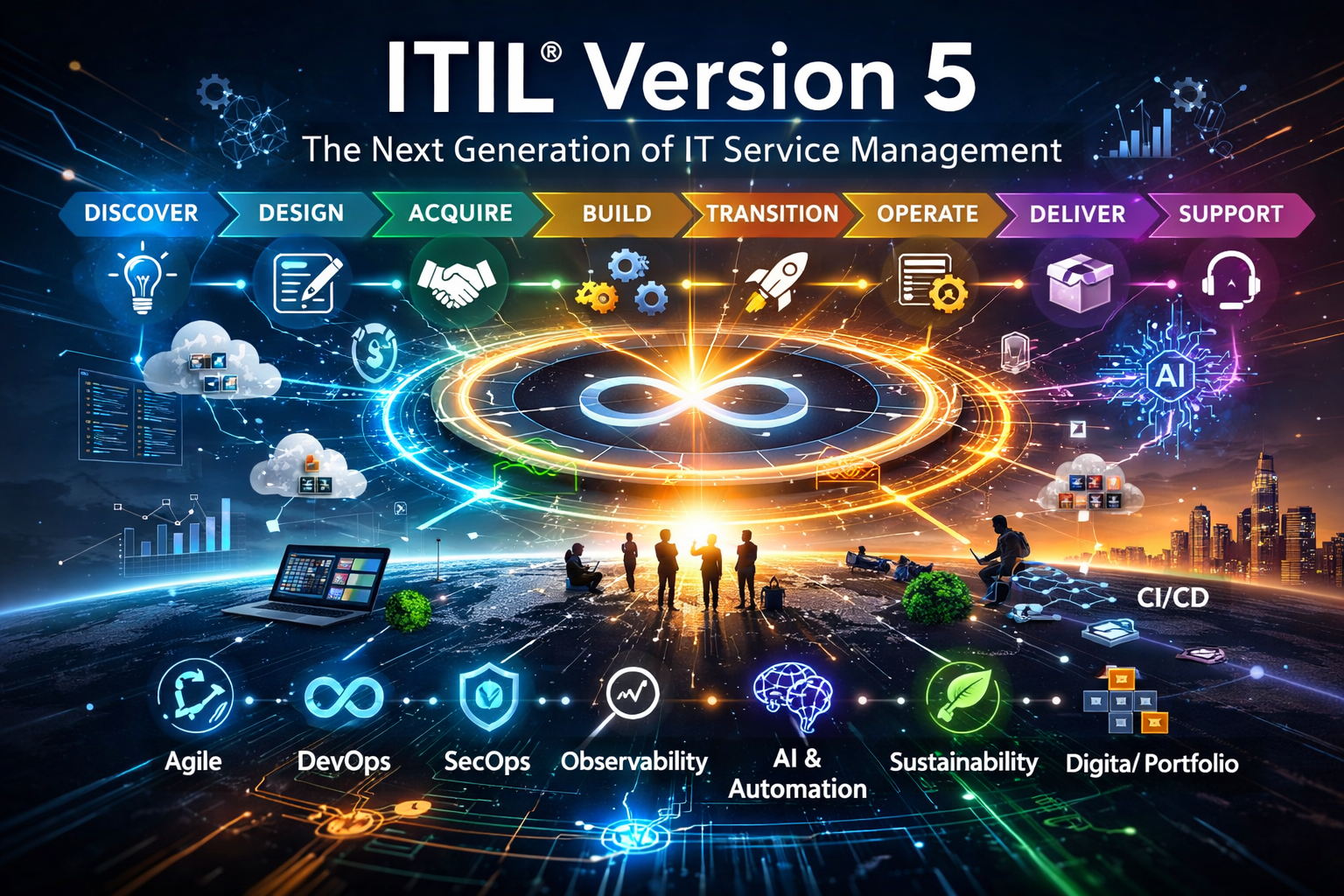
- ITIL Version 5 for digital product & service lifecycle governance
- TOGAF 10 for enterprise architecture capability and architecture governance
- ArchiMate 3.2 as the modeling language for architecture views
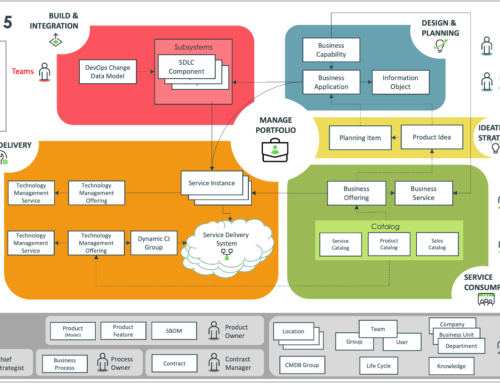
- IT4IT 3.0 as the reference architecture for “running IT as a business”
- ServiceNow as the digital control plane across SPM, ITSM, ITOM, ITAM, IRM, SecOps, ESG, and TPRM
On top of this, boards and regulators expect maturity in:
- Enterprise Risk Management
- BCM (Business Continuity Management)
- DR (Disaster Recovery)
- ESG (Environmental, Social & Governance)
- TPRM (Third-Party Risk Management)
The goal is not “collect all frameworks”. The goal is controlled, secure, resilient, and well-architected value delivery.
1. One Operating Spine, Many Frameworks
Each discipline answers a distinct enterprise question:
| Discipline | Core Question |
|---|---|
| SAFe | What initiatives do we fund and in what order? |
| DevOps | How do we deliver changes faster and more reliably? |
| SecOps | How do we detect, respond to, and contain cyber threats? |
| ITIL Version 5 | How do we manage the full digital product & service lifecycle? |
| TOGAF 10 | How do we organize and govern enterprise architecture capability? |
| ArchiMate 3.2 | How do we model our architecture consistently across business, application, and technology layers? |
| IT4IT 3.0 | What is the reference value-stream architecture for the “business of IT” itself? |
| Risk Management | Are we operating within acceptable risk and compliance boundaries? |
| ServiceNow | How do we orchestrate, automate, and make all of this visible? |
The risk is fragmentation: separate reporting chains, duplicated governance, competing workflows, and diagrams that don’t match reality. The solution is one integrated operating spine:
| Layer | Primary Driver | Key Frameworks | ServiceNow Anchor |
|---|---|---|---|
| Enterprise Architecture & Design-Time Governance | Architecture coherence and guardrails | TOGAF 10, ArchiMate 3.2 | SPM, CMDB, custom EA integrations |
| IT Management Reference Architecture | IT value streams and capabilities | IT4IT 3.0 | SPM, ITSM, ITOM, ITAM, IRM as concrete implementations |
| Strategy & Funding | Portfolio decisions | SAFe, TOGAF (Architecture Vision) | SPM |
| Engineering Flow | Build & deploy fast | DevOps, IT4IT “Requirement-to-Deploy” | Dev toolchain integrated to SPM / Change |
| Security Monitoring & Response | Detect & respond | SecOps, IT4IT “Detect-to-Correct” | ServiceNow SecOps |
| Service Lifecycle Governance | Run & improve services | ITIL Version 5, IT4IT “Request-to-Fulfill” | ITSM |
| Runtime & Observability | Know what is running where | ITIL Version 5, IT4IT | ITOM |
| Asset & Cost Governance | Manage IT as assets and cost | ITIL, IT4IT “Strategy-to-Portfolio” | ITAM |
| Enterprise Risk & Compliance | Keep exposure acceptable | Risk Mgmt, TOGAF governance | IRM |
| BCM / DR | Resilience | Risk Mgmt, ITIL, TOGAF (BC views) | IRM + ITOM |
| ESG | Sustainability & governance | ESG frameworks, Risk | IRM ESG |
| TPRM | Vendor & supply chain risk | Risk Mgmt, IT4IT (sourcing) | IRM TPRM |
In short, TOGAF, ArchiMate, and IT4IT define the design-time structures; SAFe, DevOps, SecOps, and ITIL define the ways of working; ServiceNow provides the runtime execution and evidence.
2. SAFe: Strategic Direction and Funding
SAFe structures how strategy becomes executable work:
- Portfolio prioritization and Lean budgeting
- Definition of operational and development value streams
- Agile Release Trains to deliver increments of value
TOGAF’s Architecture Vision and Business Architecture inform which value streams and epics make sense in the first place. ArchiMate models can show how proposed solutions support capabilities and value streams.
ServiceNow SPM supports this by providing:
- Epic and initiative tracking with architecture impacts
- Strategic alignment to themes, capabilities, and architecture roadmaps
- Investment visibility and governance
- Outcome and benefit tracking
This ties portfolio decisions to both architecture intent (TOGAF/ArchiMate) and execution reality (SAFe/DevOps).
3. DevOps: Flow and Engineering Discipline
DevOps focuses on the engineering side of flow:
- Continuous Integration and Continuous Delivery (CI/CD) pipelines
- Automated build, test, and deployment processes
- Infrastructure as Code and configuration automation
- Small batch releases and fast feedback loops
DevOps optimizes:
- Lead time for changes
- Deployment frequency
- Change failure rate
- Mean Time to Recover (MTTR)
IT4IT’s “Requirement-to-Deploy” value stream gives a reference model for the tooling and data objects along this path (backlog items, builds, test results, releases). TOGAF and ArchiMate inform constraints and patterns (reference architectures, building blocks) that DevOps teams implement in code.
In the integrated model:
- SAFe decides what is built and in what order.
- TOGAF/ArchiMate defines how it should look at the architecture level.
- DevOps defines how it is built and deployed technically.
- IT4IT describes how the overall IT value stream is structured and measured.
4. SecOps: Detection, Response, and Cyber Resilience
SecOps is distinct from DevOps:
- DevOps builds, tests, and deploys changes.
- SecOps detects, analyzes, and responds to threats in the runtime environment.
Typical SecOps responsibilities:
- Security incident triage and response
- Threat intelligence ingestion and correlation
- Coordinating vulnerability remediation with product teams
- Integration with SIEM/SOAR platforms
- Forensics, containment, and post-incident learning
IT4IT’s “Detect-to-Correct” value stream describes the logical flow of events, problems, and fixes across tooling. ArchiMate models can show where security controls sit in the architecture stack (e.g. at application, infrastructure, and network layers).
In ServiceNow:
- SecOps manages vulnerability response and security incident workflows.
- Incidents and vulnerabilities linked to configuration items (CIs) discovered by ITOM.
- Risk and control implications connect to IRM.
DevOps protects the pipeline; SecOps protects the running services; architecture ensures we know where everything actually is.
5. ITIL Version 5: Lifecycle Governance
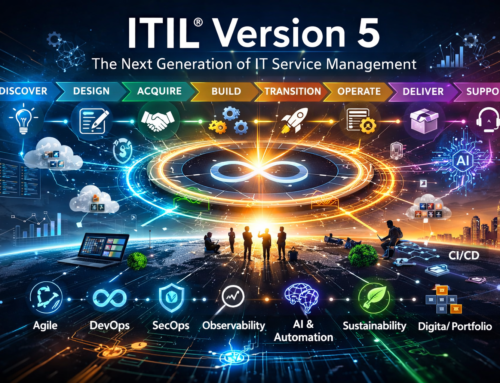
ITIL Version 5 provides the lifecycle model for digital products and services:
Discover → Design → Acquire → Build → Transition → Operate → Deliver → Support
In a combined SAFe/DevOps/ITIL/IT4IT environment:
- Discover & Design — guided by architecture (TOGAF/ArchiMate) and portfolio choices (SAFe).
- Acquire & Build — executed using DevOps, aligned with IT4IT Requirement-to-Deploy.
- Transition — governed by ITIL change and release practices, linked to pipelines.
- Operate — supported by ITOM observability and IT4IT Detect-to-Correct.
- Deliver & Support — handled through ITSM processes (incident, request, problem, service levels).
TOGAF’s Architecture Repository and ArchiMate models serve as design-time reference; ITIL and IT4IT ensure that runtime processes and data flows stay consistent with that design.
6. TOGAF 10, ArchiMate 3.2, and IT4IT 3.0: The Architecture Layer
TOGAF 10: Architecture Capability and Governance
TOGAF 10 defines:
- An Architecture Development Method (ADM) to iteratively develop architectures
- Architecture content structures and building blocks
- Architecture governance and compliance mechanisms
- Metamodels and reference models for business, data, applications, and technology
In this multi-framework setup, TOGAF provides the governance umbrella for defining, approving, and enforcing architectures across SAFe trains, DevOps teams, and ServiceNow implementations.
ArchiMate 3.2: Visualizing the Architecture
ArchiMate is the modeling language that turns TOGAF concepts into diagrams that humans can argue over productively. It enables:
- Consistent modeling of business, application, and technology layers
- Clear mapping of capabilities to applications and infrastructure
- Visualization of value streams, services, and flows
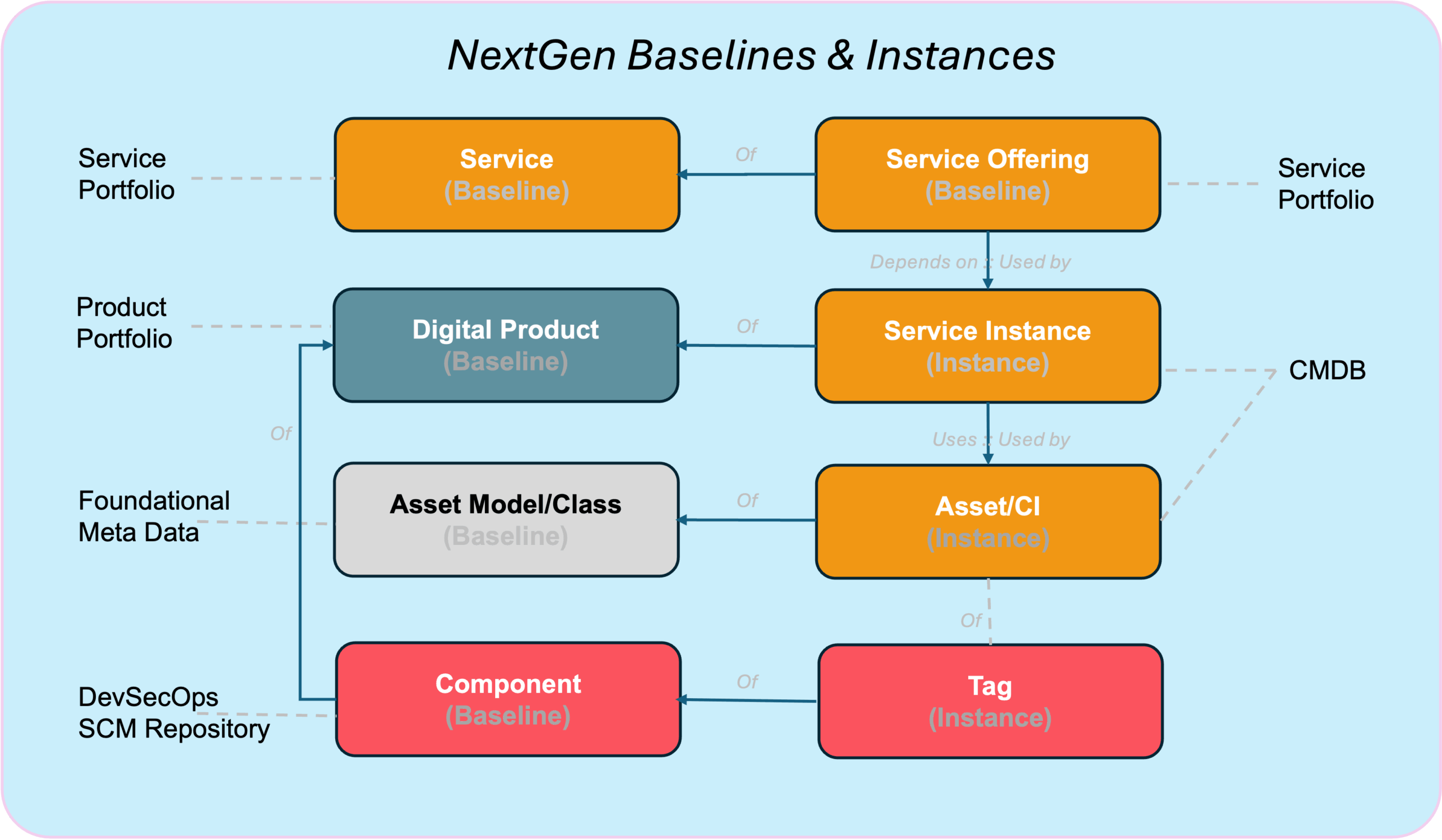
These models can be mapped to the ServiceNow CMDB and SPM:
- Business services and capabilities → Business services/spm offerings
- Applications → Business application CIs and service offerings
- Technology nodes → Infrastructure CIs (servers, clusters, clouds)
The result: design-time views in ArchiMate match runtime views in ServiceNow closely enough that people can recognize their own landscape.
IT4IT 3.0: Reference Architecture for IT Itself
IT4IT provides a reference model for IT as a value chain, with value streams such as:
- Strategy-to-Portfolio — aligning strategy, investment, and portfolio
- Requirement-to-Deploy — managing the build and deployment of new services
- Request-to-Fulfill — handling service requests and fulfillment
- Detect-to-Correct — handling incidents, problems, and improvements
These value streams map neatly to ServiceNow modules:
- Strategy-to-Portfolio → SPM, architecture governance, risk insight
- Requirement-to-Deploy → DevOps toolchain integrated to Change / Release
- Request-to-Fulfill → ITSM request, catalog, and fulfillment processes
- Detect-to-Correct → ITOM, ITSM incident/problem, SecOps, IRM
IT4IT gives a blueprint; ServiceNow and DevOps practices implement it.
7. Risk Management: The Balancing Mechanism
Risk Management exists to ensure that agility and innovation do not push the organization beyond acceptable exposure. It spans:
- Operational risk
- Cyber and information security risk
- Regulatory and compliance risk
- Third-party and supply chain risk
- Strategic and reputational risk
Within ServiceNow IRM, organizations can manage:
- Risk registers and assessments
- Control frameworks and policies
- Control testing and evidence
- Audit findings and remediation
TOGAF’s governance structures and IT4IT’s value streams provide context for where controls should live; DevOps and SecOps provide data on how they behave in reality.
8. BCM and Disaster Recovery
Business Continuity Management (BCM) and Disaster Recovery (DR) intersect architecture, operations, and risk.
In practice:
- BCM (in IRM) defines impact, critical services, RTO, RPO, and crisis playbooks.
- ITOM maps technical dependencies and real-time service health.
- ITSM coordinates major incident and disaster workflows in case of disruption.
- TOGAF/ArchiMate provides dependency and location views for critical services.
DR becomes an engineered capability that is visible both in architecture models and in runtime monitoring.
9. ESG: Sustainable Governance
ESG (Environmental, Social & Governance) increasingly shapes IT decisions:
- Cloud and data center energy consumption
- Vendor ESG performance and ethics
- Data privacy, security, and governance practices
- Overall sustainability of the IT landscape
ServiceNow ESG (part of the IRM family) allows organizations to:
- Align with ESG reporting frameworks
- Track ESG-related KPIs and targets
- Consolidate evidence for audits and reports
ITAM contributes asset and lifecycle data; SPM links ESG metrics to strategic themes and objectives; and architecture frameworks ensure that ESG requirements are designed into future-state landscapes rather than bolted on.
10. TPRM: Vendor Risk in a Platform Economy
Modern IT relies heavily on external providers:
- SaaS applications
- Cloud platforms
- Managed services and outsourcing partners
Third-Party Risk Management (TPRM) within IRM enables:
- Structured vendor risk assessments
- Ongoing monitoring and reassessments
- Compliance validation and evidence tracking
- Analysis of concentration and dependency risks
IT4IT clarifies where vendor data and controls appear in the IT value streams; ArchiMate shows which services and capabilities depend on which vendors; ServiceNow makes those dependencies operationally visible.
11. Measurement Across the System
A coherent operating model requires balanced metrics across disciplines:
| Dimension | Sample Indicators |
|---|---|
| Flow (DevOps) | Deployment frequency, lead time for changes |
| Reliability (ITOM/ITSM) | Availability, MTTR, incident volume |
| Security (SecOps) | Mean time to detect (MTTD), mean time to contain (MTTC), open vulnerabilities |
| Risk | Residual risk scores, control effectiveness, open findings |
| Continuity | BC/DR test success rates, recovery times vs. RTO targets |
| Financial | Cost per value stream, unit cost per transaction |
| ESG | Energy consumption KPIs, ESG framework scores |
| Architecture | Standards compliance, reuse of building blocks, number of exceptions granted |
ServiceNow dashboards can unify metrics from SPM, ITSM, ITOM, ITAM, IRM, and SecOps. Architecture tools provide complementary views (capability heatmaps, roadmap progress), but the numbers should match.
Final Perspective
When properly integrated:
- TOGAF 10 defines how you do architecture and enforce guardrails.
- ArchiMate 3.2 visualizes the landscape and planned changes.
- IT4IT 3.0 describes the IT value streams and data objects.
- SAFe decides what to build and why, and in which value streams.
- DevOps accelerates how it is built and deployed.
- SecOps protects the runtime environment from threats.
- ITIL Version 5 governs the lifecycle from concept to support.
- Risk Management constrains exposure and supports informed decisions.
- BCM ensures services can survive disruptions.
- ESG ensures IT contributes to sustainable business practices.
- TPRM controls vendor and supply chain dependencies.
- ServiceNow provides orchestration, automation, and traceability across the whole stack.
This is not about collecting frameworks. It is about using each one where it is strongest, and wiring them together into a single, comprehensible operating system for IT. When that happens, the acronyms fade into the background, and what remains is disciplined, secure, sustainable value delivery at scale.